BREAKDOWN 02 · FREE
One face, three fits, and a prompt that turns them into a game.
The outfit sheets and the full prompt.
The sheets
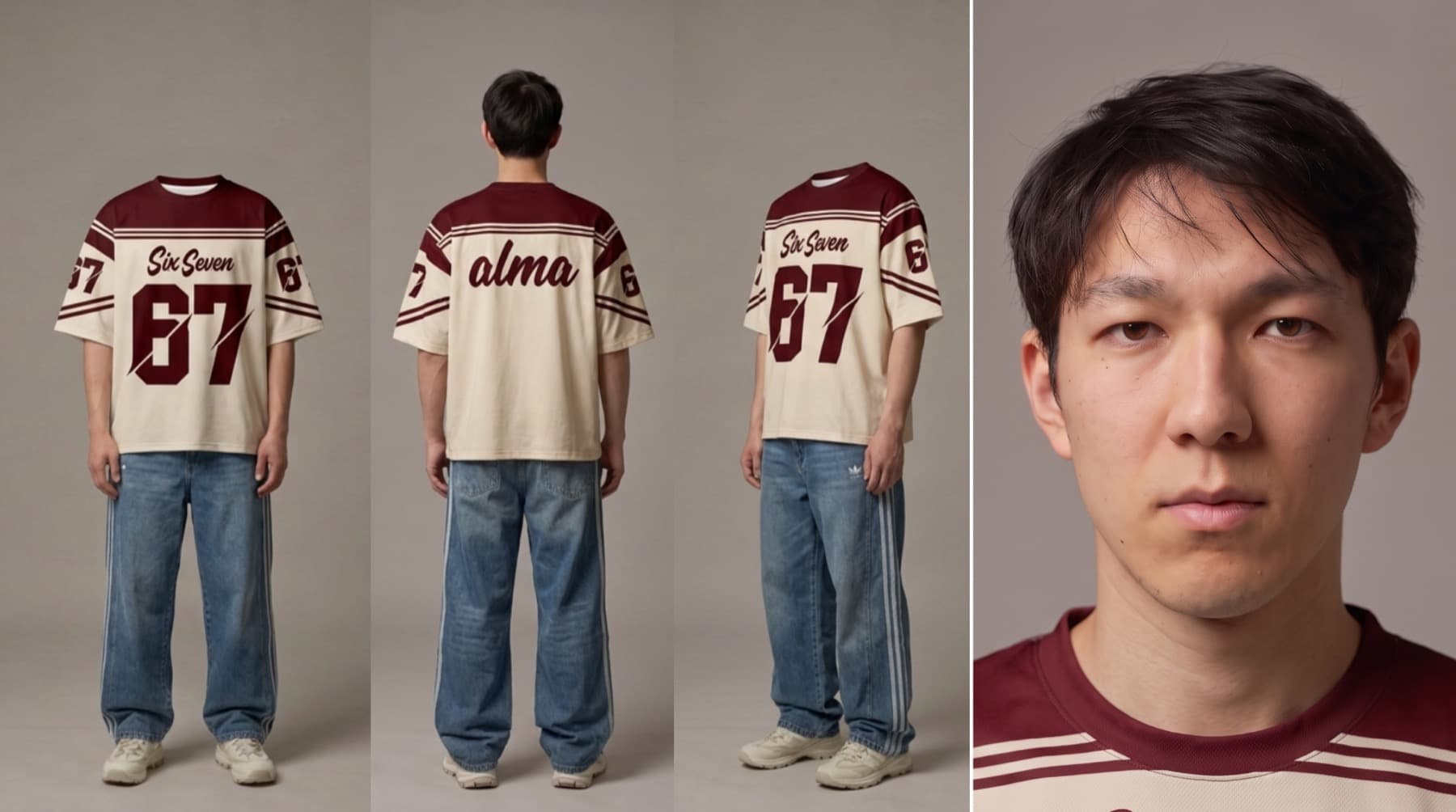
Each outfit is built as a four-panel sheet rather than a single photo: front, back, side, and a face detail, all on the same flat grey under the same light. The neutral backdrop is the point — nothing in the frame competes with the clothes, so the sheet describes the fit and nothing else.
The face panel is doing separate work. A full-length shot carries almost no usable detail above the collar, and identity is the first thing to drift. Giving it its own panel, at head-and-shoulders scale, is what holds the same person across all three fits.
The render
The prompt never describes the person. It opens by pinning down what must not change — subject, composition, camera angle, pose, facial identity, clothing silhouette — and spends everything after that on how the image should be lit and surfaced. That split is why it carries over to any input: the frame is already decided, so the model only has to re-render it.
The target is named twice, and both times as a narrow band rather than a style: cinematic realism, not full photorealism, and a gameplay screenshot, not concept art, not a cartoon, not a real photo. The list of things to avoid at the end is that same instruction from the other side — excessive bloom, plastic skin, fake sharpness, muddy shadows — naming the specific ways a render slips out of the band.
Transform the input image into a next-gen open-world video game render inspired by GTA 6. Preserve the original subject, composition, camera angle, pose, facial identity, clothing silhouette, and main scene structure, but reinterpret the entire image with a high-end Rockstar-style visual language.

The final image should feel like a gameplay screenshot from a modern Vice City / Miami-inspired world: cinematic realism, not full photorealism. Use strong tropical sunlight, warm humid atmosphere, slightly saturated Florida colors, deep directional shadows, and subtle HDR bloom. The lighting should feel bright and natural, but not overexposed.

Give the subject realistic skin, fabric texture, hair detail, and material definition, while keeping the overall character design slightly stylized and game-like rather than perfectly photographic. The environment should feel dense, lived-in, and believable, with rich background detail, street clutter, signage, objects, and NPC-style atmosphere where appropriate. Surfaces should show wear, roughness, dust, small imperfections, and realistic texture response to light.

Aim for a look that combines:

- realistic materials
- clean, readable game geometry
- cinematic composition
- vibrant urban Florida energy
- subtle open-world game rendering clarity

Important: keep the image looking like a premium in-game screenshot, not concept art, not a cartoon, and not a real photo. Avoid excessive bloom, plastic skin, fake AI sharpness, muddy shadows, or generic cyberpunk styling.